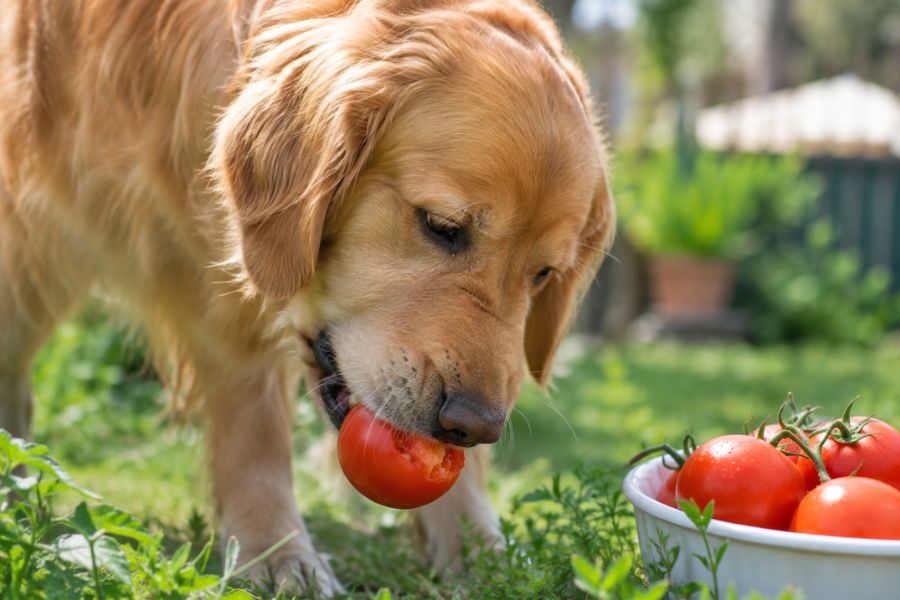
A bright red tomato may look like a harmless snack, while a firm green tomato raises more questions. Dogs can eat small amounts of ripe, red tomato flesh when it is plain and prepared correctly. Green tomatoes, stems, leaves, and unripe plant parts deserve more caution because they contain higher levels of tomatine.
This guide explains tomato safety, portions, risky plant parts, warning signs, serving ideas, and when professional help is appropriate. Readers will find practical answers for feeding, gardening, symptoms, portions, and emergency decisions.
Can Dogs Eat Tomatoes?
Healthy adult dogs can usually tolerate a small piece of fully ripe tomato. A tomato should never replace a balanced canine diet, and individual dogs may react differently to new foods.
The safest choice is plain, ripe tomato flesh with the stem, leaves, and core removed. Wash it, cut it into bite-sized pieces, and offer a modest amount. Avoid tomato sauces, soups, canned preparations, and seasoned dishes because they can contain ingredients unsafe for dogs.
Green Tomatoes vs. Ripe Tomatoes
Why Green Tomatoes Need More Caution
Unripe green tomatoes contain more tomatine, a naturally occurring glycoalkaloid found throughout tomato plants. Concentrations are higher in leaves and stems. A small accidental bite does not automatically mean poisoning, but large amounts create greater concern.
Dogs that eat green tomatoes may develop digestive upset or other symptoms. Puppies, small dogs, and animals consuming a substantial quantity deserve attention because body size and amount eaten affect potential risk.
Why Ripe Tomatoes Are the Better Choice
As tomatoes mature, their tomatine content decreases. Fully ripe red tomatoes are generally considered the safer form for dogs when served in moderation. Remove all green portions and plant material before serving.
Ripe tomato can provide water and nutrients, but it should remain an occasional treat.
What Parts of a Tomato Can Dogs Eat?
The tomato itself is the key distinction.
- Ripe red flesh: Generally safe in small portions for most dogs.
- Green or unripe flesh: Higher tomatine levels make it a less desirable choice.
- Leaves and stems: Avoid them. These plant parts contain higher concentrations of tomatine.
- Tomato vines: Keep dogs away from them.
Seeds and skin: Small amounts of ripe tomato seed and skin are not usually the main safety concern. Washing the fruit and removing tough or damaged areas is sensible.
How Much Tomato Can a Dog Eat?
Portion size depends on your dog’s size, diet, health, and tolerance. Start with one or two small pieces of ripe tomato. Watch for digestive changes before offering more on another occasion.
A large serving can cause stomach upset even when the fruit is ripe. Treats should make up only a limited part of a dog’s daily intake. If your dog has a sensitive stomach, dietary restrictions, or an existing health concern, ask your pet care professional before introducing tomato.
Signs of Tomato Poisoning in Dogs
Tomatine exposure can cause vomiting, diarrhea, drooling, reduced appetite, weakness, drowsiness, or an upset stomach. More serious exposure can affect coordination, heart function, or other body systems.
Symptoms do not confirm the cause. A dog may vomit after eating tomato because of stomach irritation, another ingredient, or an unrelated illness. Note what your dog ate, how much was consumed, and when it happened. That information can help a professional assess the situation.
What to Do If Your Dog Eats a Green Tomato
Do not panic, and do not make your dog vomit unless a qualified professional specifically tells you to do so. Remove remaining plant material from your dog’s reach.
Contact a veterinary professional if your dog ate a large quantity, consumed leaves or stems, is very young or small, or develops concerning symptoms. Prompt veterinary care can help determine whether monitoring at home or further treatment is appropriate.
Safe Ways to Serve Tomatoes to Dogs
Use a fresh, ripe tomato. Wash it thoroughly, remove the stem and leaves, discard green sections, and cut the flesh into small pieces.
Skip ketchup, pasta sauce, salsa, pizza toppings, and heavily seasoned tomato dishes. These foods may contain onion, garlic, excessive salt, sugar, spices, or other ingredients dogs should not consume.
Frozen ripe tomato pieces can work as occasional treats in warm weather. A tiny piece mixed into regular food can provide variety without turning tomato into a major dietary component.
The Bottom Line
Ripe red tomato flesh is generally the safer option for dogs when offered plain and in small amounts. Green tomatoes and tomato plant parts deserve caution because they contain more tomatine. Portion control, careful preparation, and quick action when symptoms appear make tomato treats a safer choice.
Frequently Asked Questions
1. Are green tomatoes poisonous to dogs?
A: Green tomatoes contain more tomatine than ripe tomatoes. A small bite may not cause serious illness, but larger amounts increase concern. Avoid deliberately feeding unripe tomatoes, leaves, stems, and vines to your dog.
2. Can dogs eat red tomatoes every day?
A: Ripe red tomatoes can be an occasional treat, not a daily staple. Too much may cause digestive upset and add unnecessary calories. Keep portions small and maintain a complete, balanced diet as your dog’s main nutrition source.
3. What happens if a dog eats tomato leaves?
A: Tomato leaves contain higher concentrations of tomatine than ripe fruit. A dog that eats leaves may develop vomiting, diarrhea, weakness, drooling, or other symptoms. Contact a professional if a significant amount was consumed or symptoms appear.
4. Can puppies eat ripe tomatoes?
A: Puppies may tolerate tiny amounts of ripe tomato, but their diets need to support growth and development. Introduce unfamiliar foods sparingly. Ask a pet care professional before adding tomato if your puppy has dietary sensitivities.
5. Can dogs eat cooked tomatoes?
A: Plain cooked ripe tomato may be tolerated, but preparation matters. Avoid sauces and recipes containing onion, garlic, excess salt, or rich seasonings. Check every ingredient before sharing cooked tomato with your dog.
6. Should I call a professional if my dog eats a green tomato?
A: Seek professional advice if your dog eats a large amount, consumes leaves or stems, or develops symptoms. Have the tomato type, estimated amount, and exposure time ready for your pet’s safety.
Book Pet Appointment