

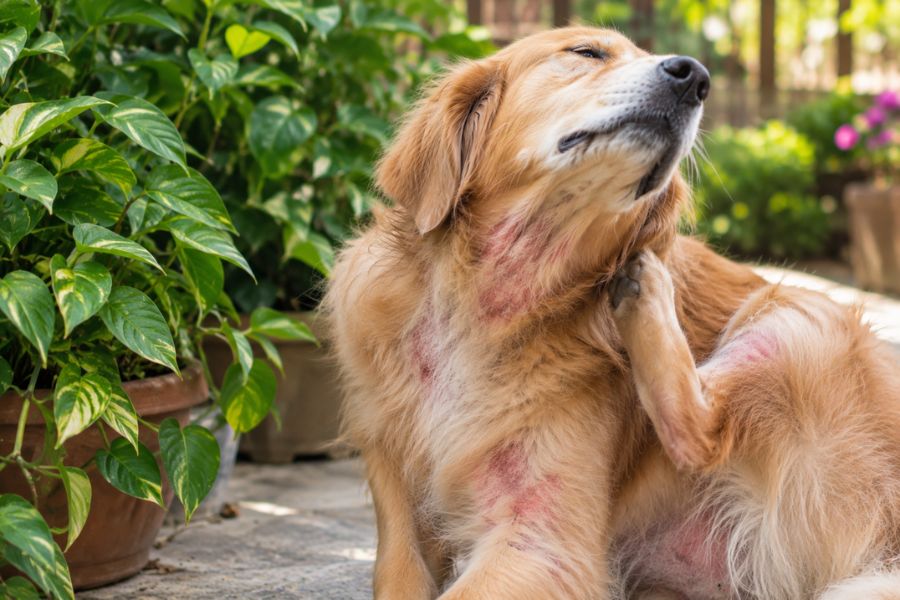
Fall brings cooler temperatures, falling leaves, and enjoyable outdoor walks. Dogs with seasonal skin allergies may experience a different side of autumn: persistent itching, red skin, paw licking, and recurring ear irritation. Fall allergens, including ragweed pollen, mold spores, and decaying leaves, can trigger allergic reactions in sensitive dogs.
Fleas and indoor allergens may also contribute to seasonal flare-ups. Recognizing the symptoms, understanding common triggers, and knowing when to seek veterinary care can help protect your dog’s skin health. This guide explains why fall allergies happen, how to manage discomfort, and which warning signs deserve professional attention.
Why Do Dogs Develop Fall Skin Allergies?
Seasonal skin allergies develop when a dog’s immune system overreacts to substances in the environment. These substances, called allergens, can trigger inflammation and uncomfortable itching.
Common Fall Allergy Triggers
- Ragweed pollen: Ragweed releases pollen during late summer and fall in many regions. Sensitive dogs may develop itchy paws, irritated ears, and inflamed skin after exposure.
- Mold spores: Damp leaves, wet soil, and decomposing plant material create conditions where mold can grow. Dogs that sniff, walk, or play around these areas may encounter mold spores.
- Falling leaves and yard debris: Leaf piles can collect moisture, pollen, and mold. Dogs that roll in or explore these areas may experience increased skin irritation.
- Indoor allergens: Cooler weather can mean more time indoors. Dust mites and household mold may contribute to ongoing itching when windows remain closed and indoor exposure increases.
Seasonal patterns differ by location, weather, and individual sensitivities. Fall allergies are not the only explanation for itching, so symptoms should be evaluated carefully.
Signs of Seasonal Skin Allergies in Dogs
Dogs often show allergies through their skin rather than obvious respiratory symptoms. Watch for changes in your dog’s grooming habits, behavior, and skin condition.
Common Symptoms to Recognize
- Frequent scratching, rubbing, or chewing at the skin.
- Repeated paw licking, especially after outdoor walks.
- Redness around the belly, ears, face, or armpits.
- Hair loss or irritated patches caused by scratching.
- Recurrent ear infections or head shaking.
- Small sores, scabs, or unpleasant skin odors.
Quick check: Has your dog started licking its paws more often since autumn began? Are the ears red or the skin irritated after walks? Note when symptoms occur and share those observations with your veterinarian.
Persistent itching can damage the skin and allow secondary bacterial or yeast infections to develop. Early attention may prevent discomfort from becoming more difficult to manage.
Are Fall Allergies Different From Other Skin Problems?
Seasonal allergies can resemble several other conditions. Flea bites, food allergies, contact irritation, and skin infections may produce similar symptoms.
Flea allergy dermatitis can cause intense itching, even when you cannot easily see fleas. Food allergies often cause symptoms throughout the year, although both food and environmental allergies can occur together. A sudden rash after contact with grass, cleaning products, or other substances may suggest irritation rather than a seasonal allergy.
A veterinarian can examine the skin, review your dog’s history, check for parasites, and recommend tests when needed. There is no single home symptom that reliably confirms seasonal allergies.
How to Help Your Dog During Fall Allergy Season
Managing seasonal skin allergies involves reducing exposure, protecting the skin, and treating symptoms appropriately.
Simple Steps at Home
Wipe paws after walks: Use a damp cloth or pet-safe wipe to remove pollen, dirt, and outdoor debris. Dry the paws carefully, especially between the toes.
Maintain a clean coat: Brush your dog regularly to remove loose hair and trapped debris. Ask your veterinarian whether bathing with a gentle, dog-safe shampoo could help.
Wash bedding frequently: Clean bedding and washable blankets to reduce accumulated dust, pollen, and other irritants.
Manage the yard: Remove piles of damp leaves from areas your dog uses regularly. Avoid letting your dog investigate visibly moldy plant material.
Keep parasite prevention current: Fleas can worsen itching and complicate allergy management. Use a preventive product recommended for your dog’s age, health, and lifestyle.
These measures may reduce exposure, but they cannot eliminate every allergen. Avoid applying essential oils, human creams, or medicated products without professional guidance.
When Should You Seek Veterinary Care?
Arrange an appointment if your dog scratches persistently, develops recurring ear problems, loses hair, or has irritated skin that does not improve. Professional evaluation can identify the cause and determine whether medication, allergy management, or infection treatment is needed.
Seek prompt care for painful skin lesions, rapidly spreading redness, discharge, or significant swelling. Facial swelling, breathing difficulty, or collapse requires emergency attention.
Treatment may include prescribed itch-relief medication, medicated shampoos, treatment for secondary infections, or an allergy management plan tailored to your dog. Food allergy testing may be considered when symptoms suggest a dietary trigger.
Conclusion: Keep Your Dog Comfortable This Fall
Fall skin allergies in dogs can result from pollen, mold, damp leaves, and indoor allergens. Recognizing early signs, reducing exposure, and seeking appropriate care can help manage itching and protect your dog’s skin. Persistent symptoms deserve attention rather than repeated home remedies.
If you’re located in Montgomery, reach out to Orchard Road Animal Hospital for guidance on your dog’s seasonal itching and skin concerns. Its commitment to compassionate care and community supports your pet’s well-being. Schedule an appointment if your dog needs an evaluation or a personalized allergy management plan.
Frequently Asked Questions(FAQs):
1. Why do dogs get itchy skin in the fall?
A: Fall itching can result from ragweed pollen, mold spores, damp leaves, dust mites, or fleas. Dogs with environmental sensitivities may experience flare-ups during autumn, although other skin conditions can cause similar symptoms.
2. What are the signs of seasonal allergies in dogs?
A: Common signs include persistent scratching, paw licking, red skin, irritated ears, hair loss, and recurring skin infections. Symptoms may worsen after outdoor exposure. A veterinarian can help distinguish allergies from parasites and other skin problems.
3. Can fall allergies cause ear infections in dogs?
A: Yes. Allergic inflammation can affect the ear canals, creating irritation and conditions that encourage secondary infections. Head shaking, odor, redness, or discharge should prompt a veterinary examination rather than treatment with unprescribed ear products.
4. How can I relieve my dog’s seasonal itching at home?
A: Wipe your dog’s paws after walks, wash bedding regularly, brush the coat, and reduce contact with damp leaf piles. Arrange professional care if itching persists, worsens, or causes sores.
5. Can dogs develop fall allergies even when they stay indoors?
A: Yes. Dogs can encounter indoor allergens such as dust mites and mold spores. Pollen may also enter through open windows, clothing, or footwear. Indoor exposure can contribute to symptoms throughout the fall season.
6. When should I take my itchy dog to the veterinarian?
A: Schedule an appointment for persistent scratching, recurring ear infections, hair loss, or damaged skin. Seek urgent attention for severe swelling or rapidly worsening symptoms, and emergency care for breathing difficulty or collapse.
Book Pet Appointment